
According to the Portuguese League Against Cancer, there are 12,000 new cases of skin cancer in Portugal every year.
Sunlight reaches us in the form of ultraviolet rays: UVA, UVB and UVC.
Although these rays are essential for survival, they are absorbed by the skin and cause ageing, dark spots and sunburn, and increase the risk of skin cancer.
This brings two very important points to light:
- We must protect the ozone layer, which shields us and prevents us from being exposed to too much sunlight.
- We must protect our skin and eyes from excessive sunlight.
Here are a few suggestions:
- Wear sunglasses with UV-A and UV-B protection – your eyes also need protection from ultraviolet rays.
- Wear a wide-brimmed hat to protect your head, nose, eyelids and ears.
- Whether you’re at the beach or in the mountains, avoid exposure to the sun between 11.30 am and 4.30 pm, and don’t be fooled by cloudy days – UV rays pass through clouds.
- Wear loose-fitting, light-coloured clothing that covers most of your body, and only take it off when you go for a swim.
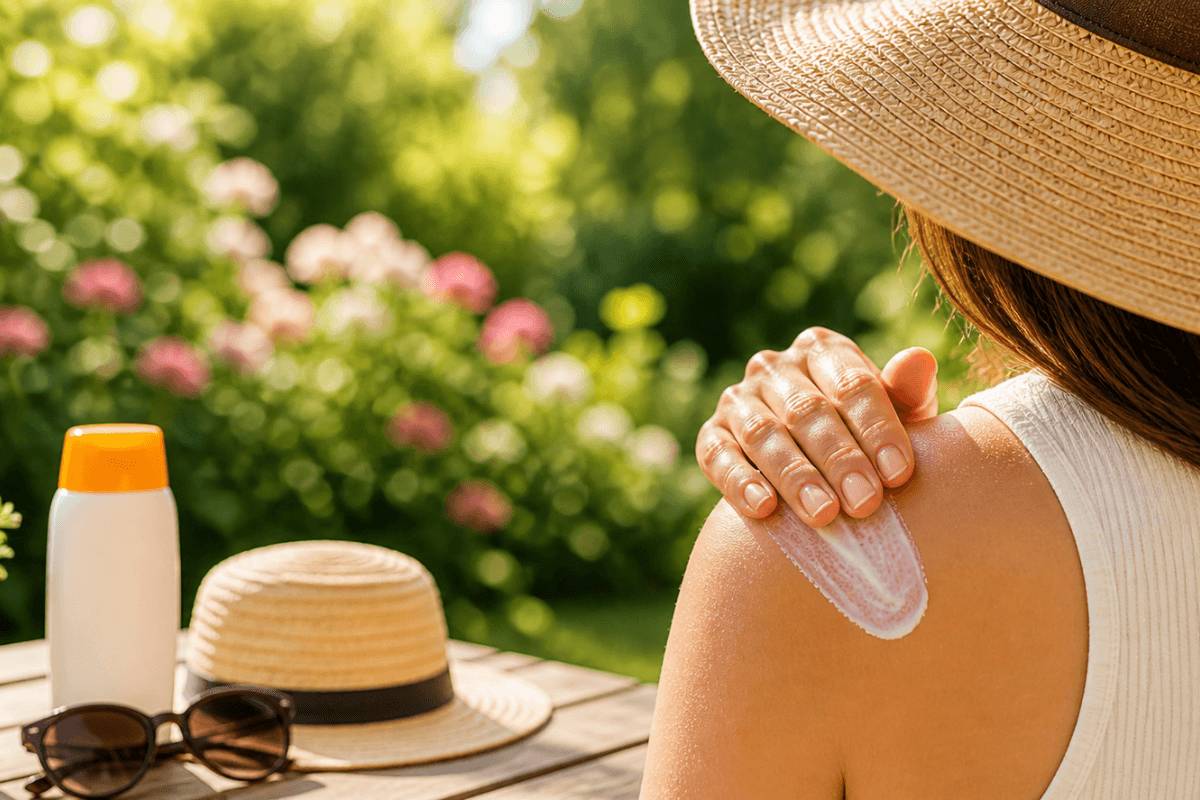
- Use sun cream.
How do you choose a sun cream?
- Choose a sun cream that blocks both UVA and UVB rays, and always with an SPF of over 30.
- Look out for sun creams suitable for children.
What is SPF, or ‘Sun Protection Factor’?
We often see the ‘Sun Protection Factor’ listed on sunscreens; this figure relates to the strength of the sunscreen, but it does not mean that using a product with an SPF higher than 50 will protect you for the whole day.
This figure indicates the amount of time you can spend in the sun.
For example:
Everyone has a different skin type, which reacts to the sun in a different way.
In different locations, on different days and at different times of day, the amount of UV radiation reaching us varies (this is known as the Ultraviolet Index – the higher it is, the more radiation reaches us, and the more protection we need).
Now, a sunscreen with SPF 50 (if applied correctly) means that only 1/50th of the sun’s radiation will reach the skin, increasing by 50 times the amount of time that particular person, at that specific moment and in that specific location, can spend in the sun without getting burnt, up to a maximum of 2 hours.
The higher the SPF, the better your skin will be protected against damage caused by UV rays.
Don’t underestimate UV rays; even if you don’t feel your skin burning, just a few minutes’ exposure to the sun may be enough for you to notice a severe sunburn by the end of the day.
How do you use sun cream?
- Apply sun cream generously, but without rubbing it in, all over your body, making sure not to forget your hands and feet, face and scalp, if you have thin hair. Your nose and ears, which are so easily overlooked, should also be protected.
- Apply twice as much to your face and neck as you do to the rest of your body.
- Apply sun cream 30 minutes before sunbathing and reapply every 2 hours or whenever you go for a swim or break a sweat.
Even when we’re not spending time outdoors, we should all apply sun cream to exposed areas of the body.
Cumulative exposure to the sun without protection causes the skin to age over the years and increases the likelihood of developing skin cancer.